
Last updated November 16, 2026
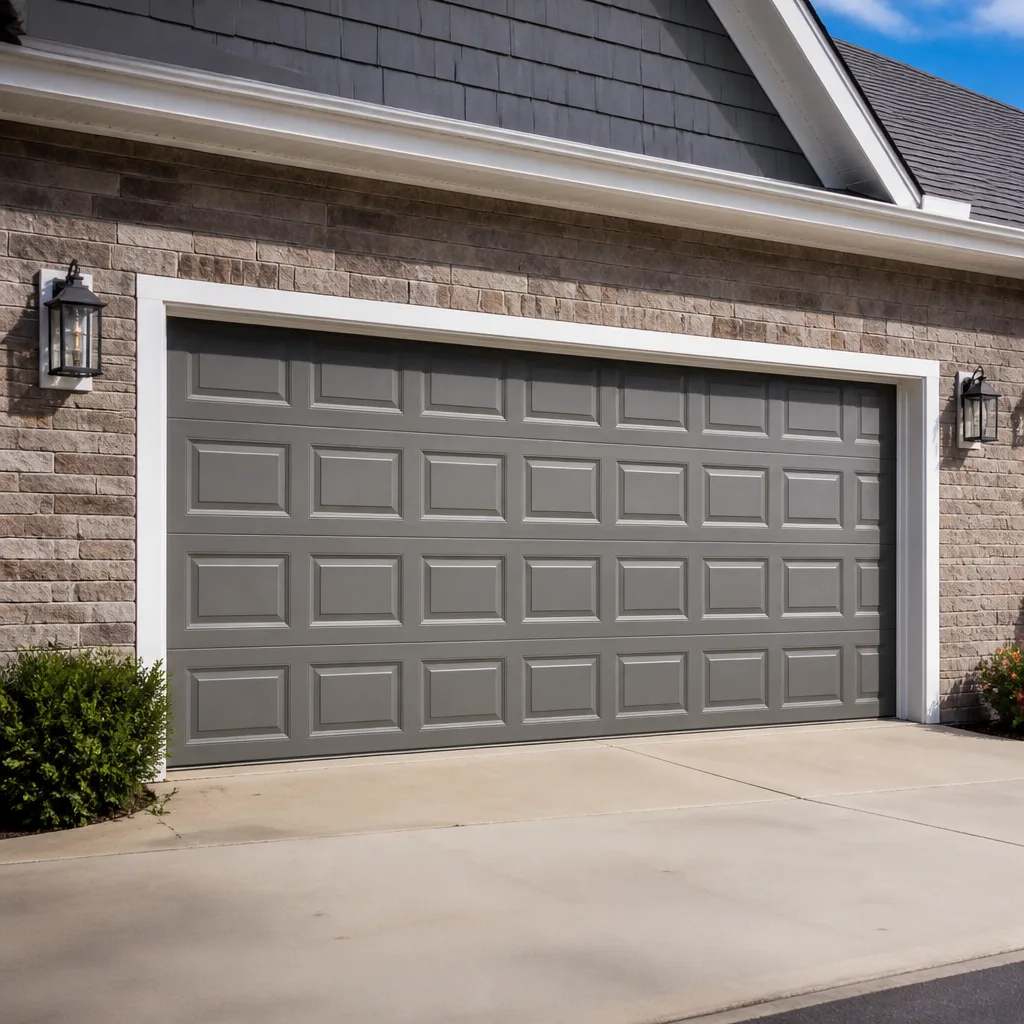 Raised-panel steel
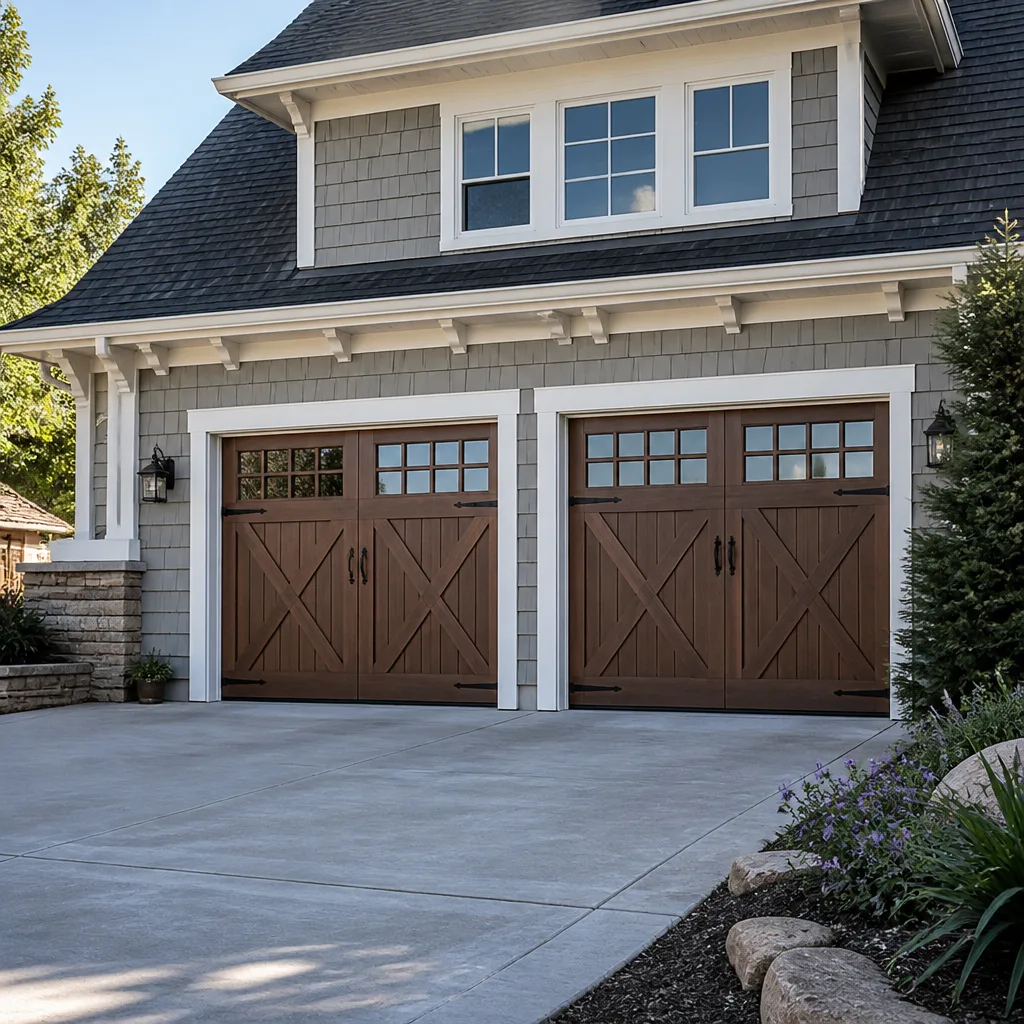 Carriage house
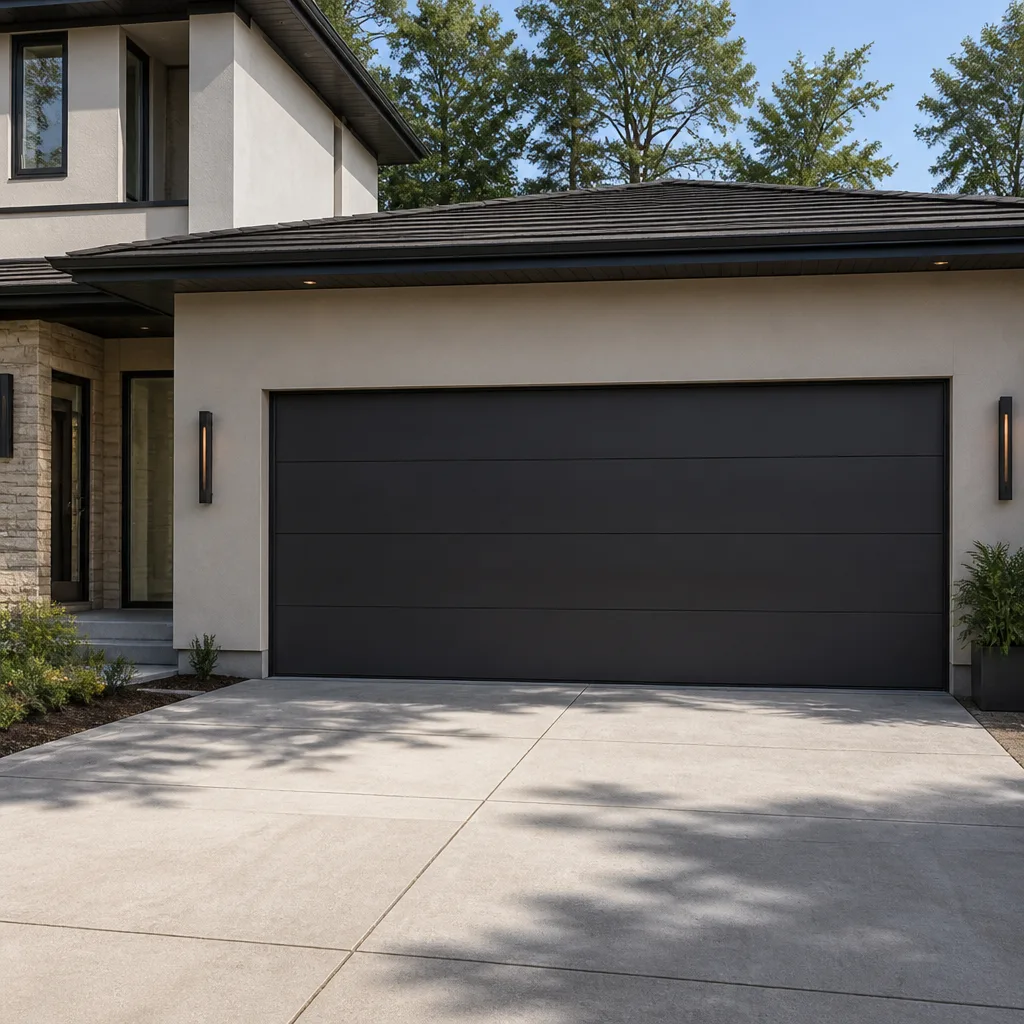 Modern flush
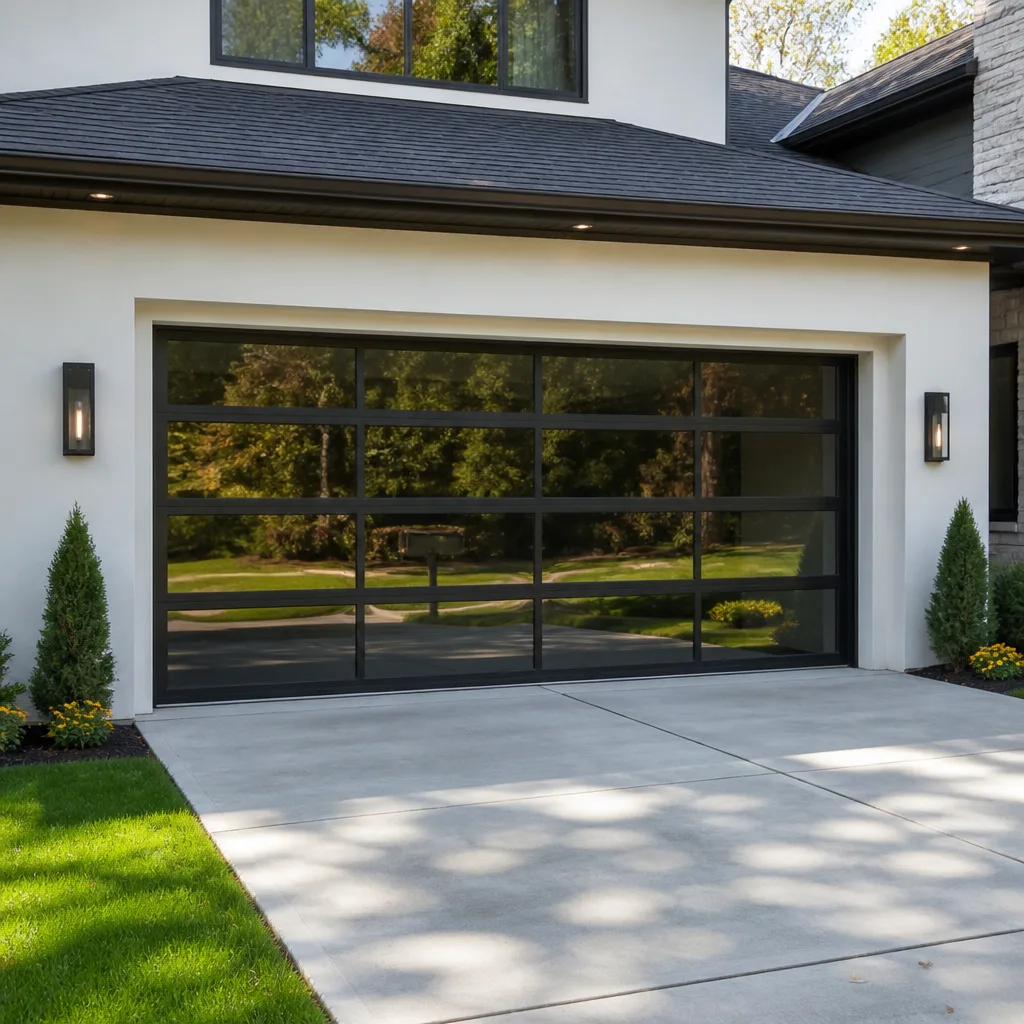 Full-view glass
 LiftMaster openers
 Chamberlain openers
Full 25-point door and opener safety check with every visit - springs, cables, rollers, tracks, and your LiftMaster or Chamberlain opener included
You get a price before we start. It does not change when the pro arrives.
Get your free estimateThe Complete Guide to Garage Doors in Daly City
Most garage door advice floating around the internet was written for a climate that doesn’t exist here. Guides crafted for Phoenix heat or Dallas thunderstorms miss the single biggest factor in how a Daly City garage door ages: moisture. Daly City sits in a fog belt that keeps the air cool and damp through most of the year, and that changes everything about springs, panels, hinges, and openers. A door that would last fifteen years inland can start showing rust and binding rollers far sooner when it lives in persistent marine humidity. This guide covers what actually matters for Daly City homeowners: how the local climate affects your door, which materials hold up, how opener systems behave in cold damp garages, what permitting involves, and when to call a specialist.
Quick Answer
Garage doors in Daly City need extra attention because the local fog-belt climate accelerates corrosion and puts constant strain on springs and hardware. The best-performing doors here are galvanized or heavier-gauge steel with sealed hardware, aluminum, or fiberglass, paired with an opener rated for cold, damp conditions. Regular lubrication and an annual balance check will extend the life of any door in this climate, and any spring, cable, or opener failure should go to a trained specialist rather than a general handyman.
Styles & brands we work with
- Raised-panel steel
- Carriage house
- Modern flush
- Full-view glass
- LiftMaster openers
- Chamberlain openers
Table of Contents
- How the Daly City Fog Belt Affects Your Garage Door
- Garage Door Configurations by Daly City Neighborhood
- Best Door Materials for Daly City’s Damp Climate
- Why Openers Behave Differently in Cold, Damp Garages
- Permits, Codes, and HOA Rules in Daly City
- Springs, Cables, and Hardware: What to Watch
- Seasonal Maintenance for Daly City Doors
- Repair or Replace? How to Decide
How the Daly City Fog Belt Affects Your Garage Door
Daly City’s fog isn’t just a weather inconvenience; it’s a slow mechanical force acting on your door every single day. Persistent humidity works its way into every moving part, and the temperature swings between cool foggy mornings and warmer afternoons create a cycle of condensation and drying that stresses metal and wood alike. In our experience, the fog belt is the number one reason doors here age faster than the same model would a few miles inland.
Here’s what happens at the component level:
- Springs corrode at the coil surface, which adds friction and shortens cycle life. A torsion spring that has years of service left inland can weaken noticeably sooner when it’s constantly exposed to damp.
- Hinges and rollers develop surface rust that turns smooth travel into grinding. Rollers are often the first part to fail.
- Steel panels rust from the inside out when moisture gets behind the paint at seams and bottom edges. A door can look fine up top while the bottom panel is quietly deteriorating.
- Wood doors absorb moisture and swell, which can bind a door in its tracks or cause the panels to warp.
- Weather seals harden and crack faster, letting more damp air into the garage and starting the cycle over again.
The practical takeaway is that a garage door in Daly City needs more frequent lubrication and inspection than a national maintenance schedule would suggest. Metal-on-metal contact points want lubrication several times a year here, not once. If you notice your door getting louder or slower, the fog belt is usually the reason. For help with a door that’s already struggling, our garage door repair team handles everything from binding tracks to snapped springs.
Garage Door Configurations by Daly City Neighborhood
The type of garage door in a Daly City home has almost everything to do with when the house was built, and the city’s neighborhoods show very different construction eras. That matters because older doors have different failure patterns, different hardware, and different replacement options than newer ones.
Westlake and Serramonte: Post-War and Mid-Century Homes
Westlake and Serramonte are dominated by the tract housing that went up in the post-war decades. You’ll find a lot of single-wide and double-wide overhead doors in steel and wood, often original or replaced once. These homes tend to have standard-height openings, sectional doors with exposed torsion springs, and openers that may be older Genie or original-equipment units. Original wood doors in this stock are especially prone to swelling and binding in the damp, and many have been or should be upgraded to steel.
Bayshore and the Flats: Denser, Mixed-Era Housing
Closer to the bay, the housing stock is more mixed, with smaller garages, tighter clearances, and a greater variety of door widths. Doors here may be narrower, and low-headroom situations are more common, which affects which springs and opener rails will fit. If you’re replacing a door in a tight garage, getting the measurements right before ordering is critical.
Hillside Neighborhoods: Custom and Split-Level Garages
In the hillside areas, split-level and custom homes often have garages tucked under living space, with lower ceilings and doors that must fit specific architectural openings. These homes sometimes have carriage-style or custom-panel doors that are harder to source and more sensitive to moisture. Repairs here often mean matching an existing style rather than swapping in an off-the-shelf door.
If you’re unsure what era your door is or what will fit, a free measure and written quote is the safest starting point. Our installation specialists work across every Daly City neighborhood and know how the housing stock shapes the job.
Best Door Materials for Daly City’s Damp Climate
Material choice is the single biggest decision you’ll make for a door that has to survive Daly City’s moisture. Here’s how the main options stack up, from best-performing to most maintenance-hungry.
Steel
Steel is the most common choice and the best all-rounder for this climate, provided you buy the heavier gauges and insist on galvanized or factory-primed construction. Thicker steel resists denting and rusts more slowly, and factory finishes with good seals hold up better than field-painted doors. Avoid the thinnest budget panels, which rust through at the bottom edge quickly in damp air.
Aluminum
Aluminum won’t rust the way steel does, which makes it a strong pick for a humid, foggy environment. It’s lighter, so it puts less strain on springs and the opener. The trade-off is that aluminum dents more easily than steel, so it’s best for garages where the door isn’t likely to take impacts. Clopay and Amarr both make aluminum and aluminum-look lines worth considering.
Fiberglass
Fiberglass is naturally moisture-resistant and won’t corrode, which suits the Daly City climate well. It’s lighter than steel, holds a finish, and won’t warp with humidity. It can crack under heavy impact and tends to fade over time, but for a low-maintenance door in a damp garage it’s a solid choice.
Wood
Wood looks the part but is the highest-maintenance option here. It swells, warps, and needs regular sealing to survive the fog belt. If you love the look, plan on more frequent upkeep, or ask about composite and steel-backed wood-look doors that give the appearance without the moisture problems. For any material, ask how the door is finished at the factory and how the warranty handles corrosion, because a warranty that voids on rust won’t help much in this climate.
Why Openers Behave Differently in Cold, Damp Garages
Your opener runs in one of the harshest spots in the house: an unheated, damp garage that stays cool through most of the year. That environment changes how openers behave, and it’s why the same unit that works flawlessly in a dry climate can act up in Daly City.
Here’s what we see most often:
- Cold-weather stiffness: Damp air and cool temperatures thicken lubricant and make the door harder to move, so the opener has to work harder. A door with slightly binding rollers can stall the opener entirely on a cold morning.
- Sensor trouble: Condensation on the safety sensors or their lenses can cause the door to reverse or refuse to close. Wiping them dry and checking alignment often resolves it.
- Motor strain: When a door is binding, the opener’s motor compensates until it eventually fails. The root cause is usually the door, not the opener, which is why diagnosing both together matters.
- Remote and connectivity issues: Smart-home openers like LiftMaster and Chamberlain systems can lose pairing or Wi-Fi connection during power dips and damp conditions. Re-pairing and checking the logic board usually sorts it out.
This is why opener repair should be a dedicated service, not an afterthought on a general handyman’s list. Our garage door opener repair technicians separate motor, drive, and smart-home connectivity problems so the fix addresses the real cause. Whether you run a modern LiftMaster or Chamberlain system or an older Genie or Craftsman unit, the diagnosis is different for each, and swapping parts without finding the cause just postpones the next failure.
Permits, Codes, and HOA Rules in Daly City
Before you replace a door, check the local rules. Replacing an existing garage door in the same opening is often a simpler process than changing the size or structure, but many cities still consider a garage door replacement a permitted project, and Daly City is no exception. The safest move is to call the Daly City building department directly and describe exactly what you plan to do. Ask whether your job needs a permit, what inspections apply, and what the current requirements are for safety features like the auto-reverse and photo-eye sensors.
Beyond permitting, keep these in mind:
- Headroom and opening size: A new door has to match the existing opening and available headroom. Measure before you order, and confirm the spring and track configuration will fit.
- Safety devices: Modern openers require working safety sensors and auto-reverse. Confirm your new system meets current requirements so you don’t fail inspection.
- HOA and design review: Many Daly City neighborhoods have HOA or architectural review rules covering door color, material, and style. Check before you buy, because a door that violates the rules can mean replacing it twice.
- Setbacks and clearance: If your garage is close to a property line or has limited clearance, confirm the new door’s track and hardware won’t encroach.
We don’t quote code or permit specifics here because local requirements change and vary by property. Ask the building department, then get a written estimate that accounts for what your job actually needs.
Springs, Cables, and Hardware: What to Watch
Springs and cables are the parts that make a garage door safe to operate, and they’re the parts the fog belt punishes most. A torsion spring stores enormous force, and when it fails it can do so violently. This is not a do-it-yourself repair; a snapped spring or a loose cable should always go to a trained professional with the right tools and safety equipment.
What you can do is watch for the warning signs:
- The door feels unusually heavy when you lift it manually, or won’t stay open halfway.
- You hear a loud bang from the garage, often followed by the door not opening.
- The door lifts crookedly or one side lags behind the other.
- Cables look frayed, kinked, or loose, or the door comes down unevenly.
- Rollers or hinges are visibly rusty or squealing.
If you spot any of these, stop operating the door and get it looked at. In Daly City, the combination of damp air and cool temperatures is especially hard on springs and cables, so an annual inspection pays off. When a spring does fail, we replace the spring itself, and where a matched pair is worn, both are usually replaced together so the door stays balanced.
Seasonal Maintenance for Daly City Doors
A few simple habits go a long way in this climate. You don’t need to be handy; you just need to know what to check and when to call.
- Lubricate moving parts several times a year. Hinges, rollers, and pivot points want lubrication more often here than in dry climates because damp air strips it away.
- Wipe down the safety sensors. Condensation and fog haze can coat the lenses and cause false reversals. A dry cloth and a quick alignment check usually fixes it.
- Wash and inspect the door surface. Rinse off grime and look at the bottom edge and panel seams for early rust. Touching up small spots early stops bigger problems.
- Listen for changes. A door that gets louder, slower, or jerky is telling you something is wearing. Address it before it becomes a breakdown.
- Test the safety reverse. Put a small object in the door’s path and confirm it reverses. If it doesn’t, stop using the door and call a technician.
- Check the weather seal. A cracked or hardened bottom seal lets damp air in and starts the corrosion cycle again.
If you’d rather have a professional look it over, a free estimate and inspection will tell you what needs attention. Our technicians have up to 12 years of experience working on doors in climates exactly like Daly City’s.
Repair or Replace? How to Decide
The right call depends on the door’s age, its condition, and what’s actually failing. A good rule of thumb is to repair when the structure of the door is sound and only a component has failed; replace when multiple major parts are worn or the door is rusting through.
Lean toward repair if:
- A single spring, roller, hinge, or opener part has failed and the panels are sound.
- The door is a few years old and still opens smoothly when the faulty part is fixed.
- The rust is surface-level and can be treated and sealed.
Lean toward replacement if:
- Multiple panels are rusting through at seams and the bottom edge.
- The door is binding, warping, or has damaged tracks that can’t be realigned.
- You’re facing a string of repairs on an older door that no longer matches current safety and efficiency standards.
- You want a material upgrade (say, from wood to steel or aluminum) that better suits the climate.
Diagnosing both the door and the opener together is the key to a good decision. A door that binds will wear out a new opener, and a failing opener can leave a sound door stuck. Our technicians are factory-familiar with Raynor, LiftMaster, Chamberlain, Genie, Clopay, Amarr, Wayne Dalton, and Craftsman systems, so they arrive already knowing what to look for.
Common Mistakes to Avoid
- Ignoring the bottom edge. Rust in Daly City usually starts at the bottom panel and seams, where moisture gathers. Check there first, because it’s the spot most homeowners skip.
- Waiting for a spring to snap. A loud bang and a door that won’t lift is the worst way to find out your spring was worn out. An annual inspection catches it early.
- Blaming the opener when the door is the problem. A binding door strains the motor. Diagnose both, or you’ll replace the opener and still have the same trouble.
- Choosing the wrong material for the climate. A thin budget steel panel or an unsealed wood door will struggle here. Pick heavier-gauge steel, aluminum, or fiberglass, and confirm how the factory protects against moisture.
- Skipping prep before replacement. Ordering a new door without measuring the opening and headroom leads to a door that doesn’t fit, or a costly exchange.
- Forgetting HOA and permit rules. A door that violates neighborhood design rules or misses a permit can mean doing the job twice, so check before you buy.
- Skipping lubrication. In a damp garage, dry moving parts wear fast. Several oilings a year will save you a repair.
See the difference
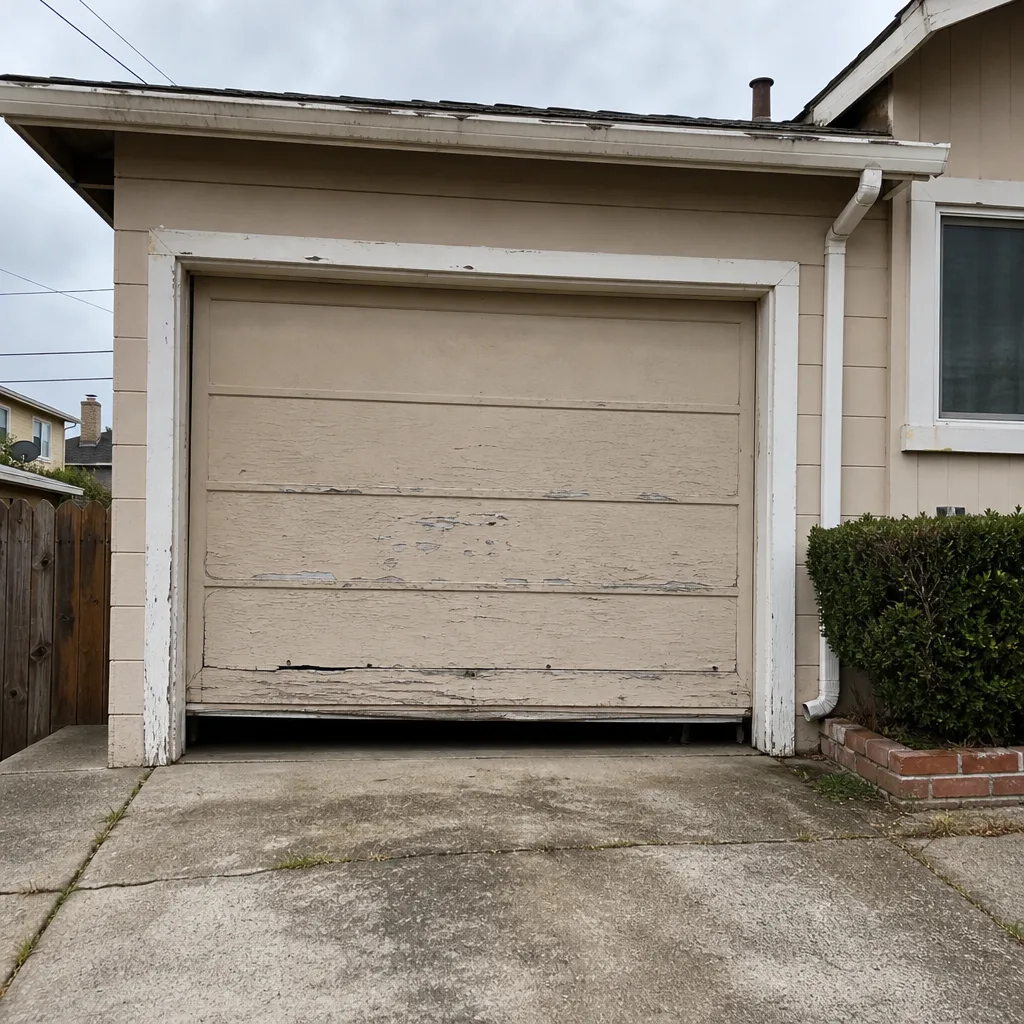 Before
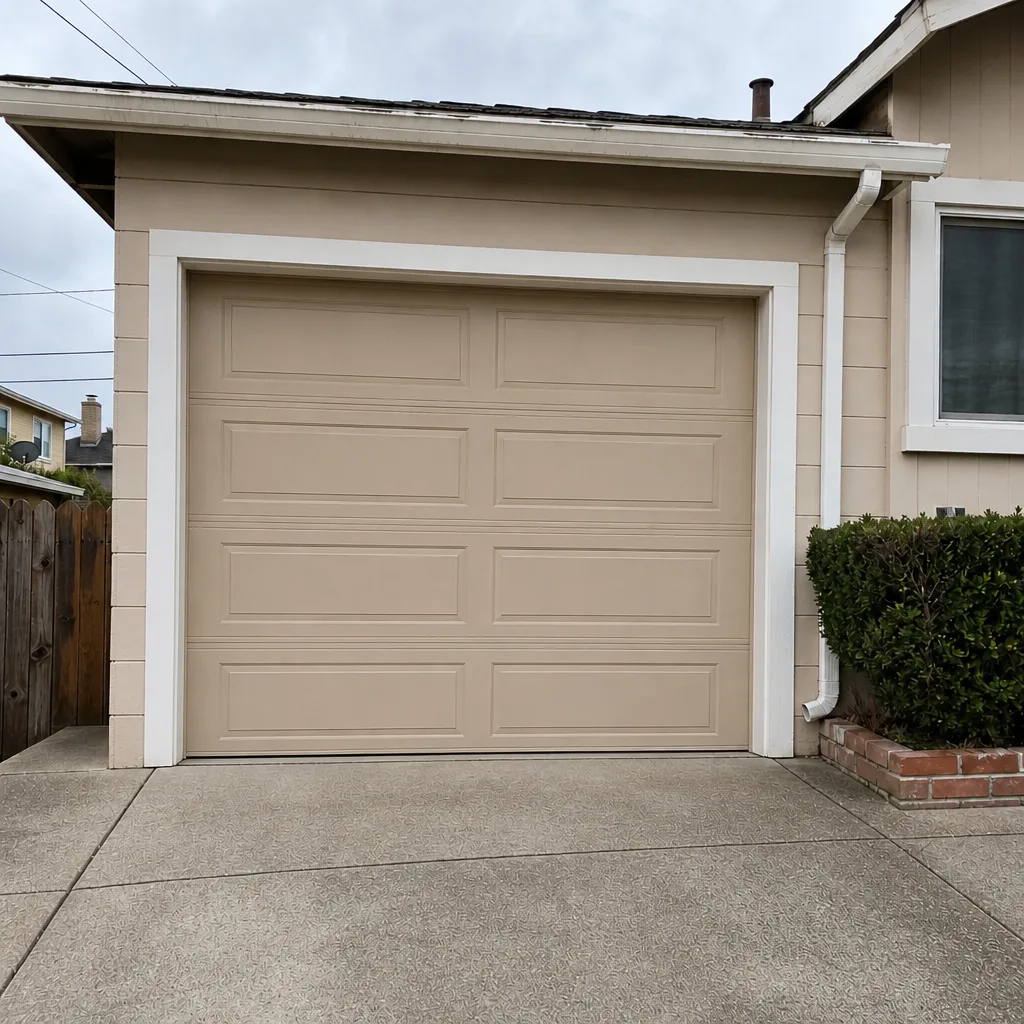 After
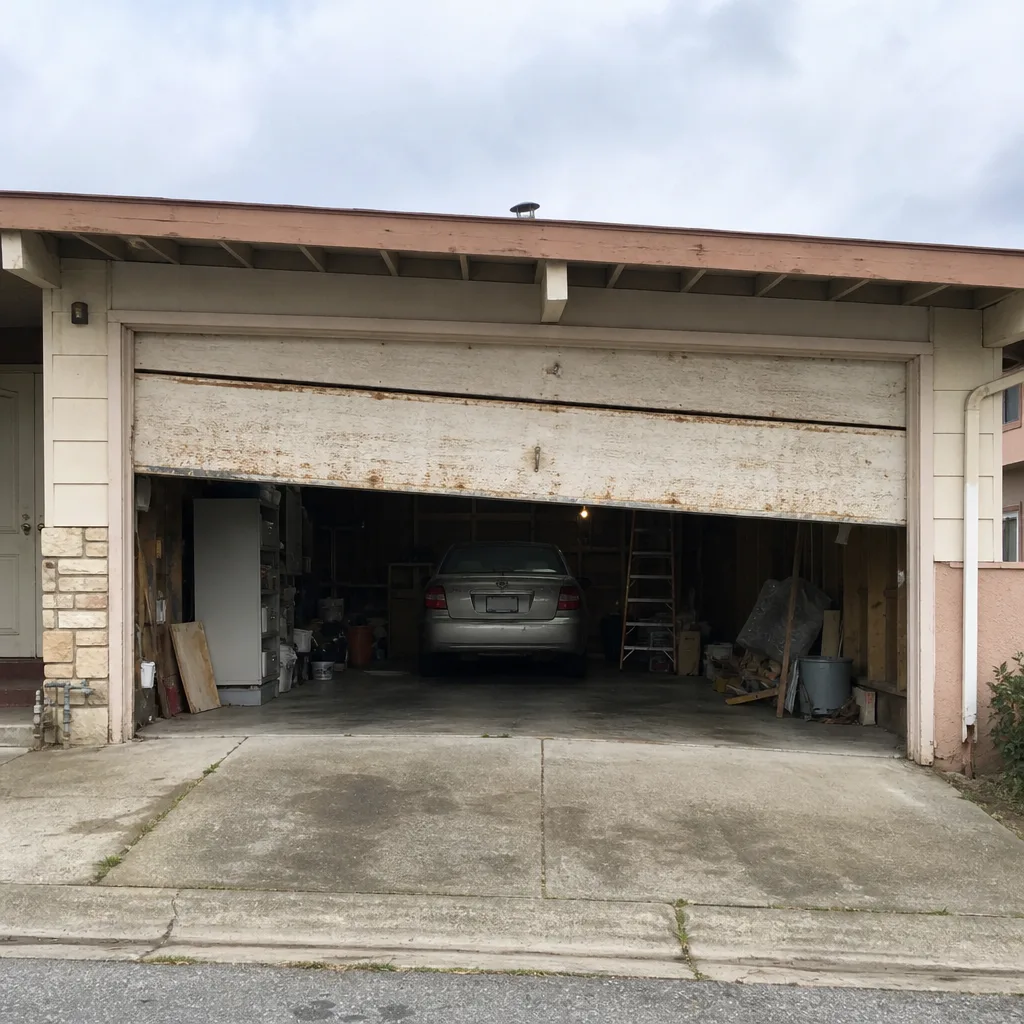 Before
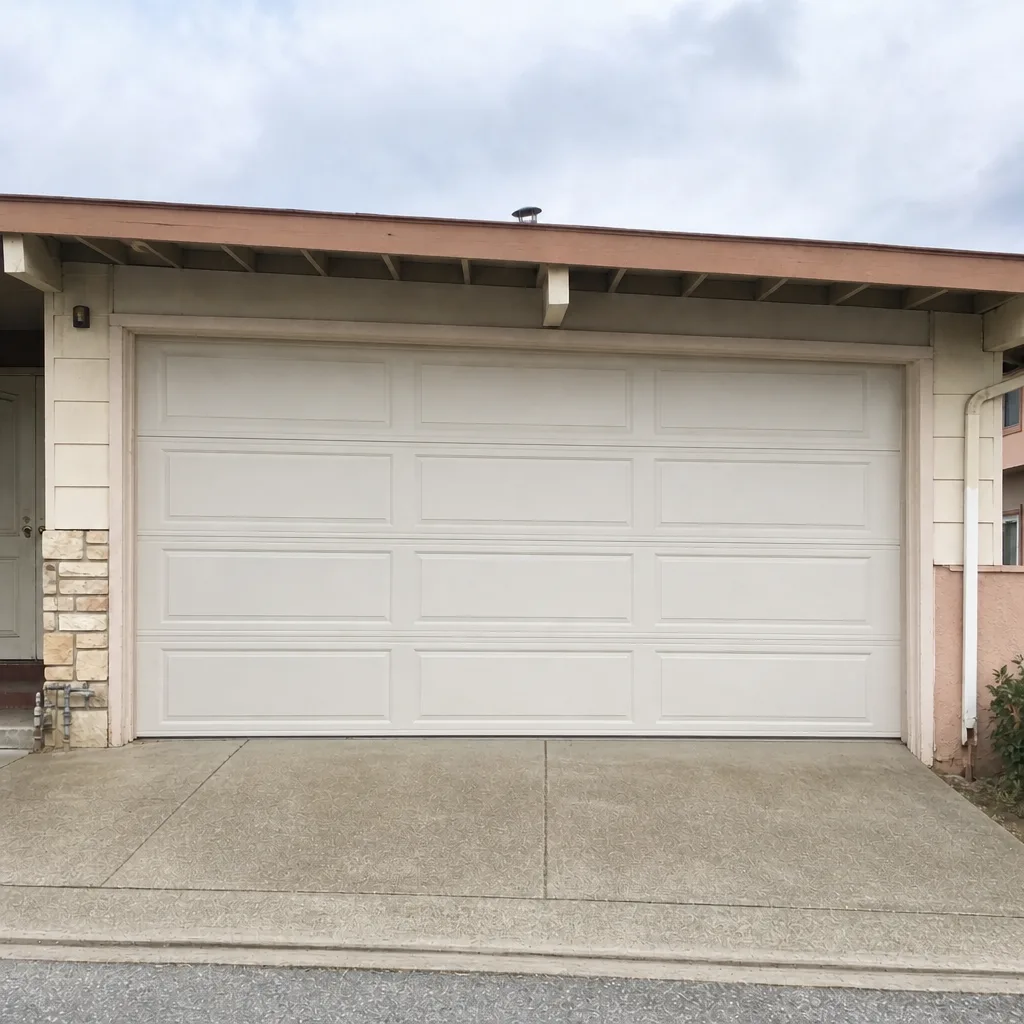 After
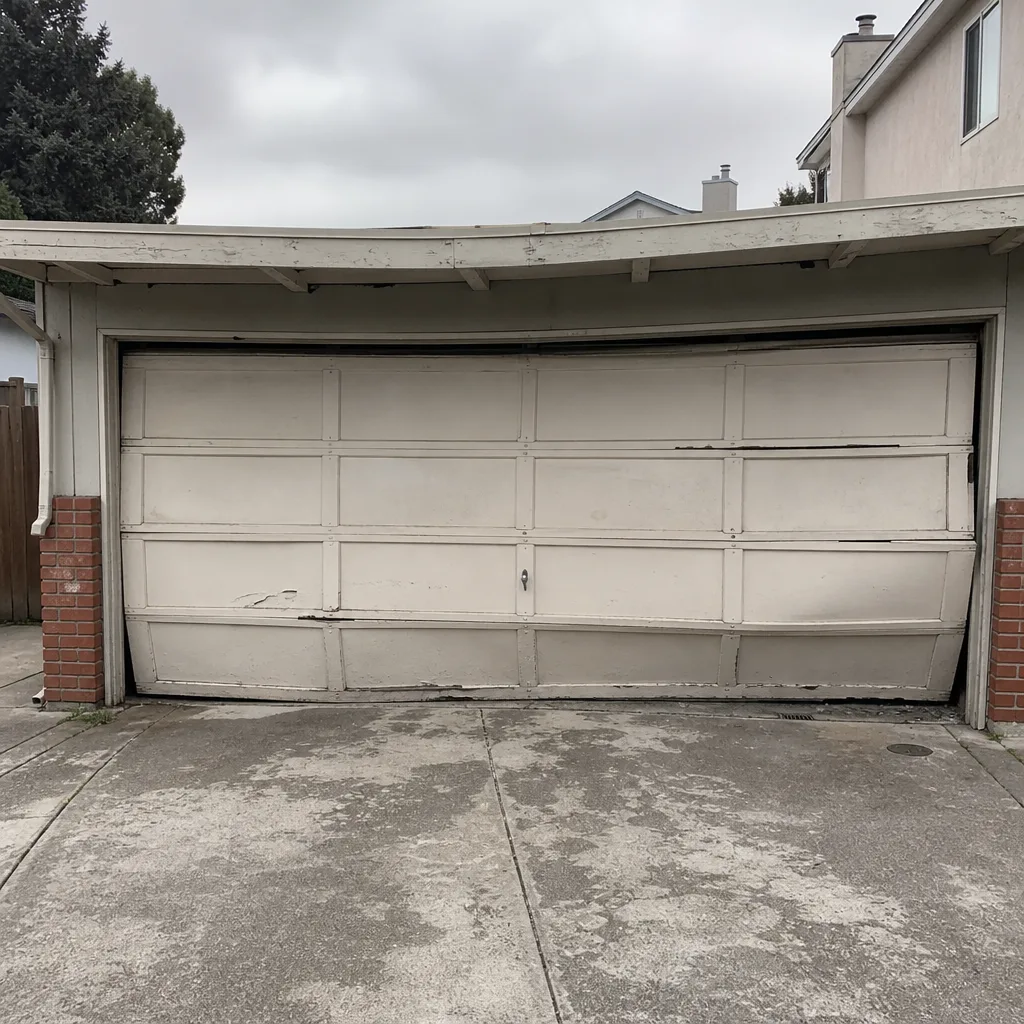 Before
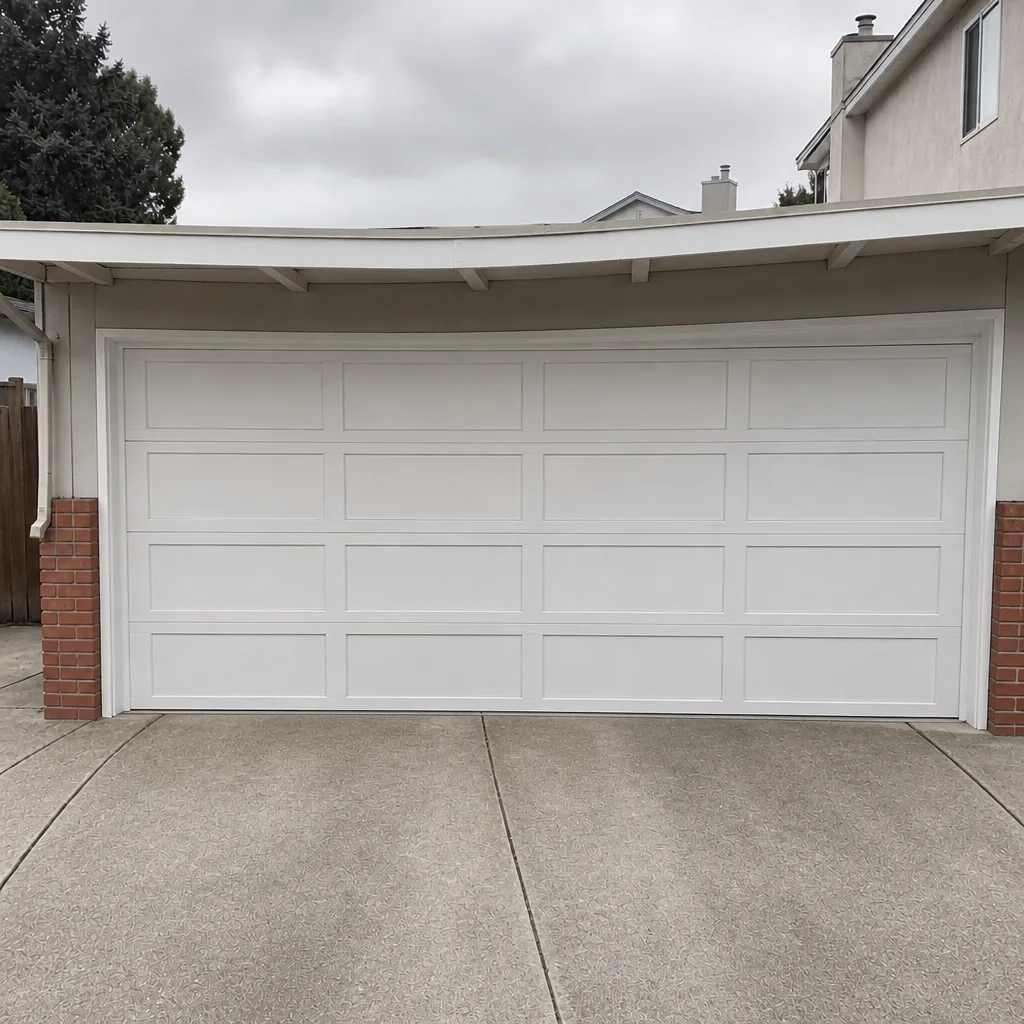 After
When to Call a Professional
Some garage door problems are best left to a specialist, and in Daly City’s climate it pays to call early. Get in touch if a spring or cable fails, if the door binds or comes down crooked, if the opener won’t reverse or stops mid-travel, or if you see rust spreading through the panels or tracks. A door that slams, jerks, or won’t stay open is a safety risk, not a nuisance, and should be looked at before it’s used again. For routine inspections, a free estimate tells you what needs attention before small issues become big ones. Regent Garage Door Repair offers free estimates in Daly City. Call (866) 812-8584. We answer 24/7, and fast dispatch runs from 7am to 7pm, Sunday through Friday. Every price is written and agreed before any work starts, so you know the cost up front.
Frequently Asked Questions
Repair costs vary with the problem, the door type, and the parts involved, so there’s no single number. A failed spring, a binding roller, or an opener fault each carries its own range. The written estimate sets the final price, and we quote it before any work begins. Call (866) 812-8584 for an exact quote; estimates are free.
Daly City’s fog-belt humidity keeps moisture in the air for much of the year, which speeds up corrosion on metal parts. Springs, rollers, hinges, and the bottom panel edge are hit first. Heavier-gauge steel, aluminum, and fiberglass hold up best, and regular lubrication slows the damage. If rust is already spreading, call (866) 812-8584 for a free inspection.
Many repairs, including spring and opener fixes, can be done the same day when a technician is dispatched. Call (866) 812-8584. We answer 24/7, with fast dispatch from 7am to 7pm, Sunday through Friday. Installations and replacements are scheduled after a free measure and written quote.
Many cities treat a garage door replacement as a permitted project, so check with the Daly City building department before you order. Ask whether your job needs a permit, what inspections apply, and what safety requirements cover the new door. Having a written scope from a specialist makes that conversation easier.
Heavier-gauge galvanized steel, aluminum, and fiberglass perform best in Daly City’s damp air. Steel is strong but rusts at seams if the gauge is thin, while aluminum and fiberglass won’t corrode and are lighter. Wood is the highest-maintenance option here. Call (866) 812-8584 to talk through what fits your garage.
The written estimate sets the price, and we agree on it before any work starts. A technician won’t surprise you with a bigger invoice after the fact. If the scope genuinely changes, you’ll be told before any extra work is done. Call (866) 812-8584 to schedule a free estimate.
The Bottom Line
Daly City’s fog belt is the defining factor in how a garage door ages here, and the right approach follows from it. Choose steel, aluminum, or fiberglass built to resist moisture, lubricate more often, inspect springs and cables annually, and diagnose the door and opener together. Check permitting and HOA rules before you replace, and measure carefully before ordering. When something fails, especially a spring or cable, don’t handle it yourself; a trained specialist protects you and your door. If you want help from Regent Garage Door Repair, a company that works on garage doors and nothing else, our Daly City specialists are ready with a free estimate and a written price.
Call (866) 812-8584 today. We answer 24/7, with fast dispatch from 7am to 7pm, Sunday through Friday, and every estimate is free and agreed before any work begins.
Written by the team at Regent Garage Door Repair.