
Last updated November 16, 2026
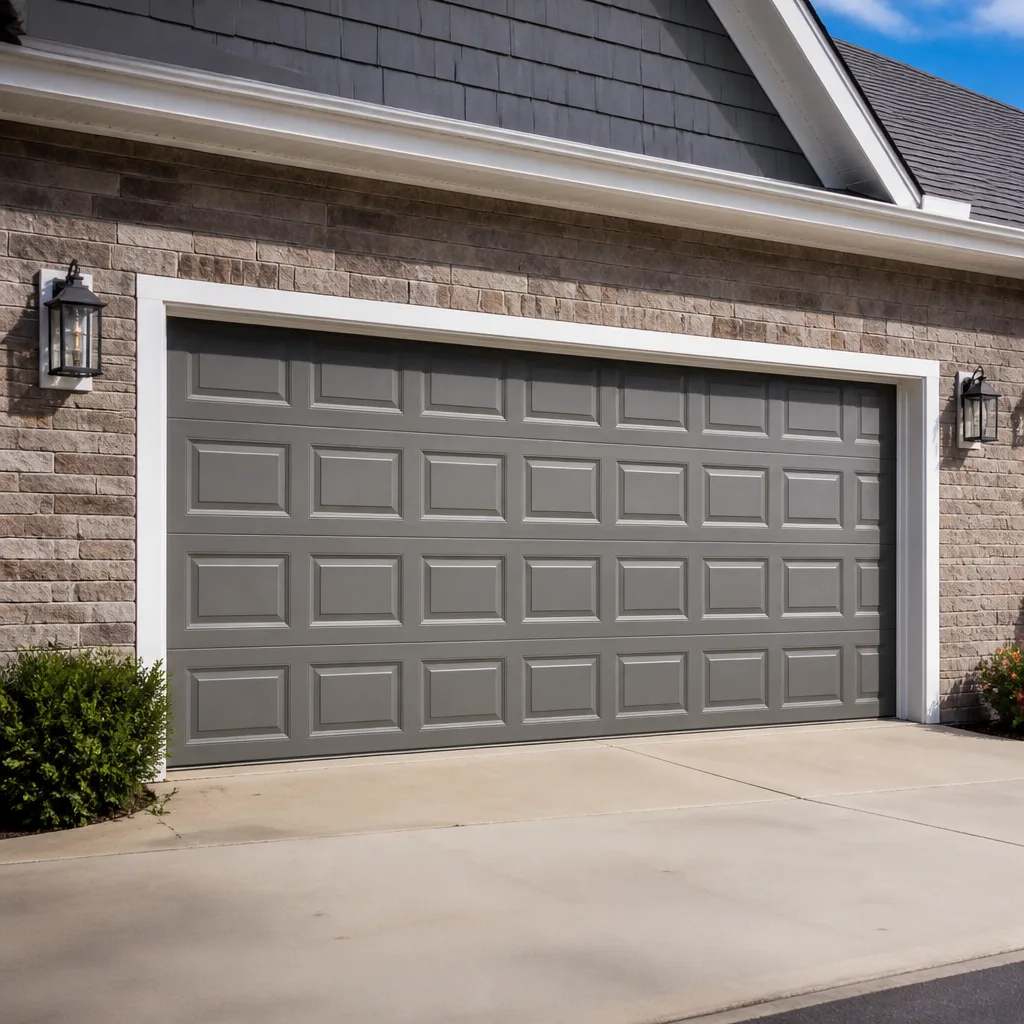 Raised-panel steel
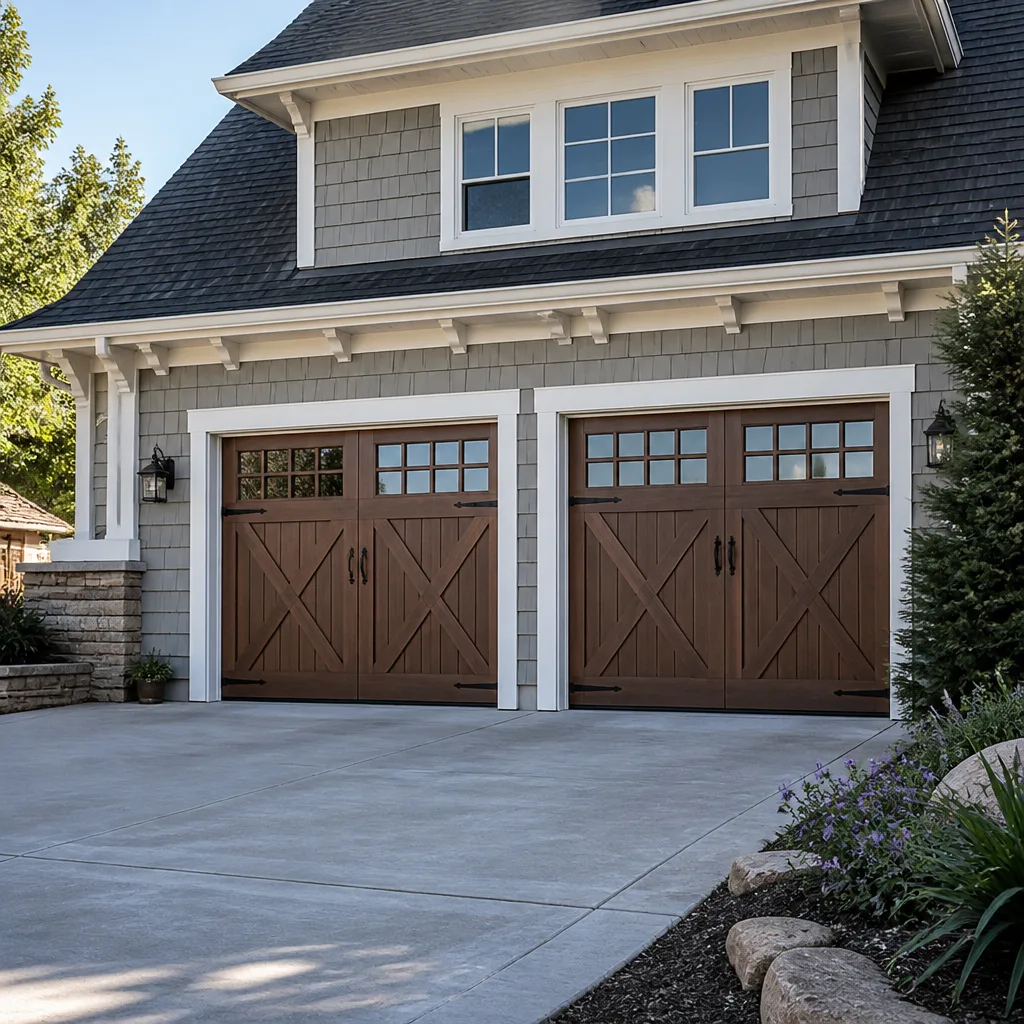 Carriage house
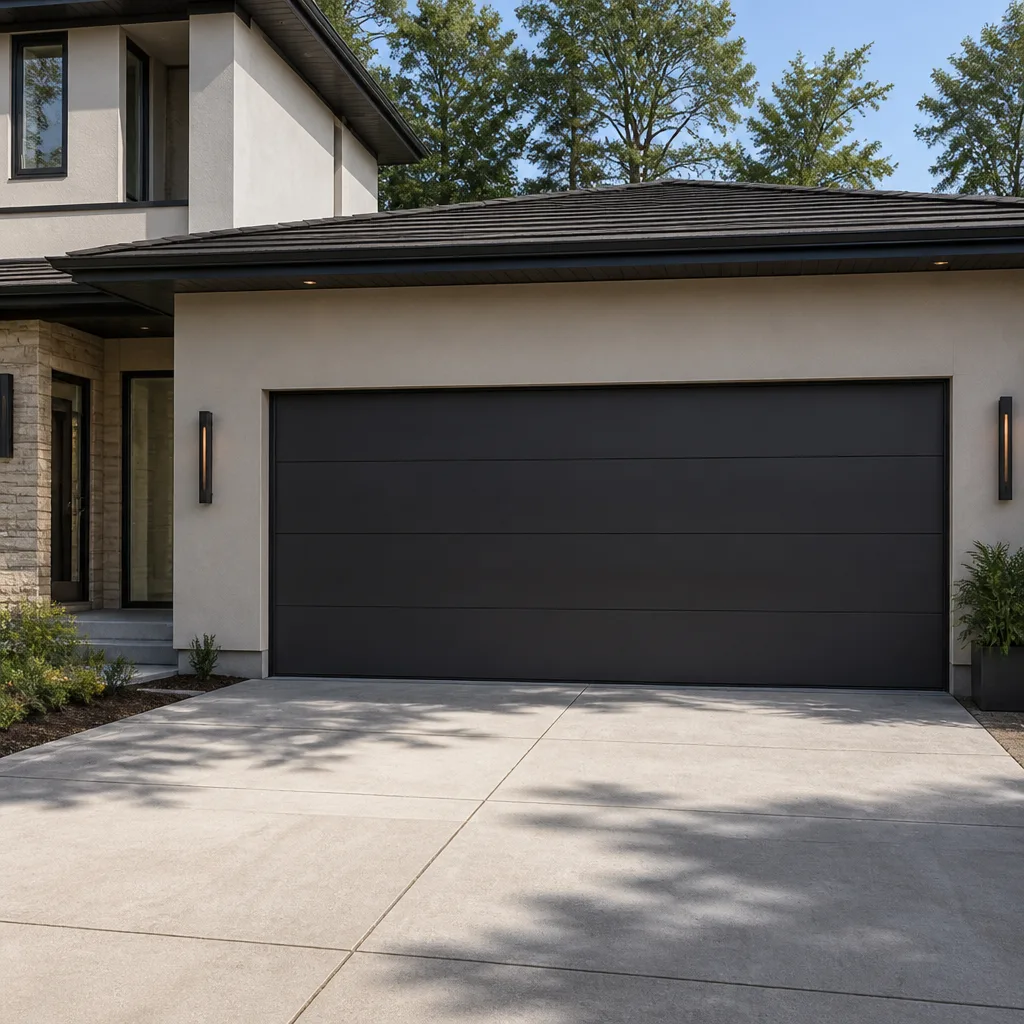 Modern flush
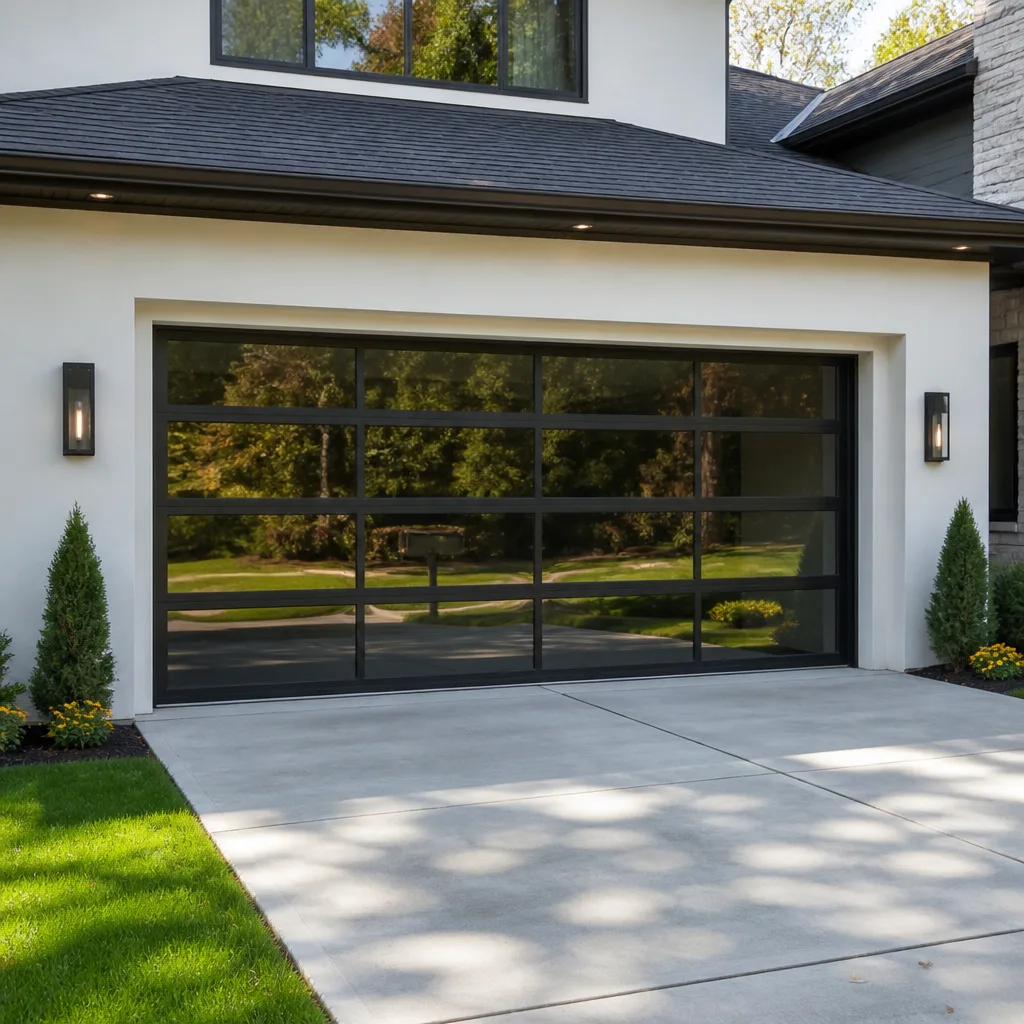 Full-view glass
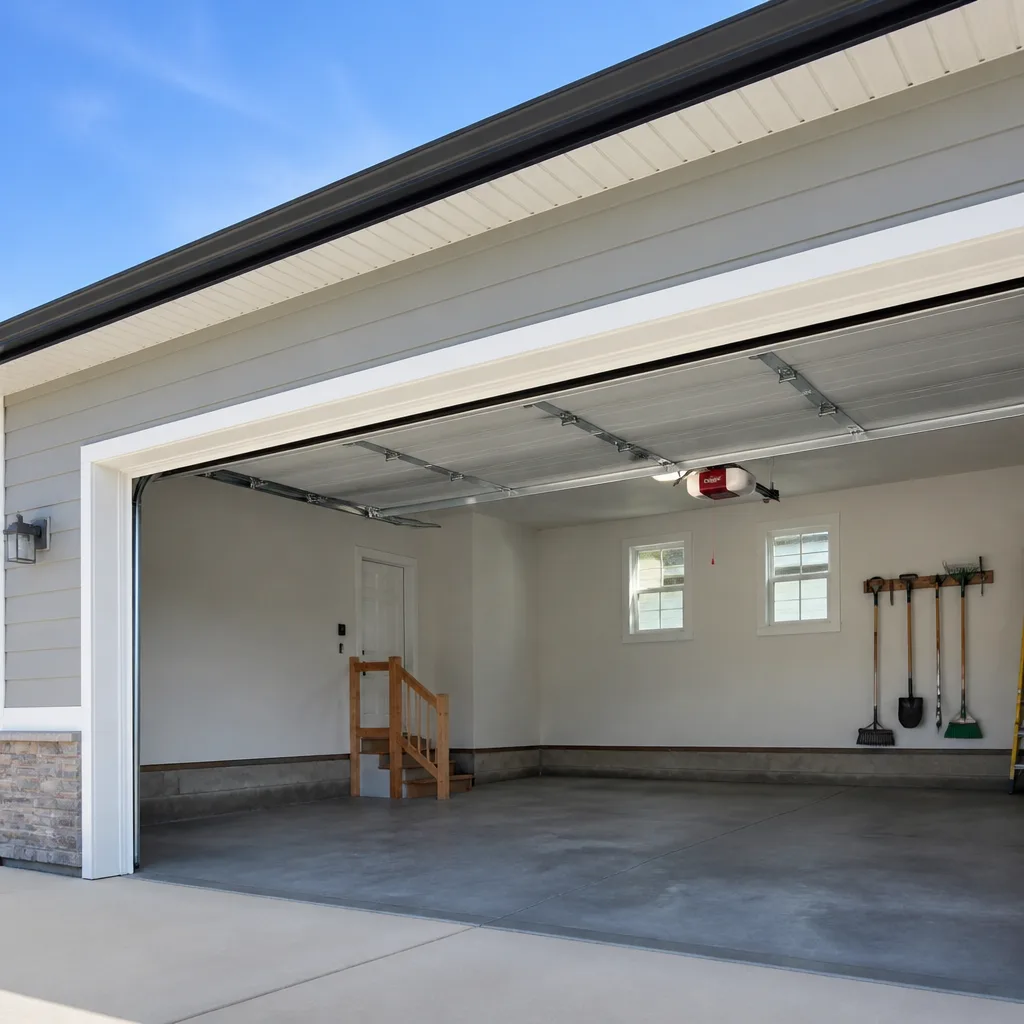 LiftMaster openers
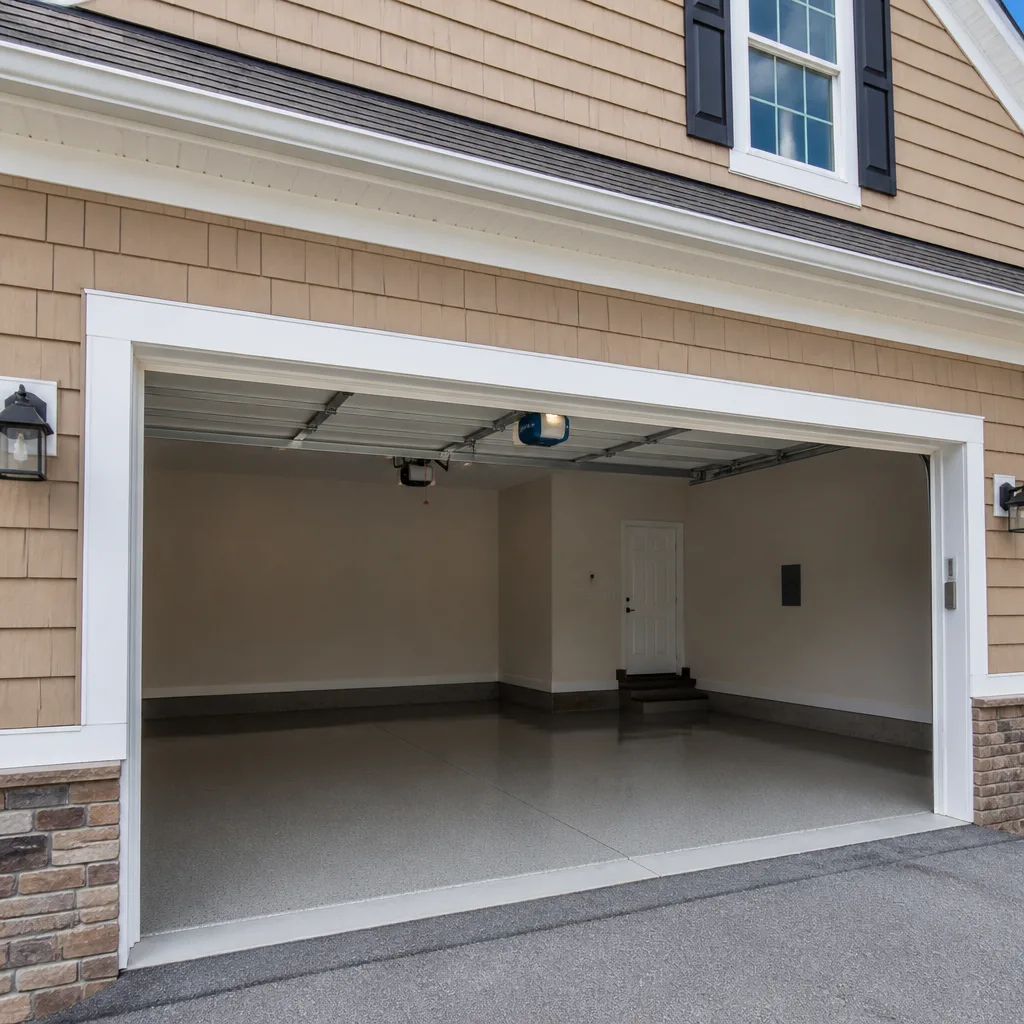 Chamberlain openers
Full 25-point door and opener safety check with every visit - springs, cables, rollers, tracks, and your LiftMaster or Chamberlain opener included
You get a price before we start. It does not change when the pro arrives.
Get your free estimateGarage Door Warning Signs: A Daly City Homeowner’s Reference Guide
That grinding sound your garage door makes on cold mornings isn’t the door “warming up.” It’s a metal-on-metal friction signal that your rollers are shedding their protective nylon coating, and the phase that follows is a door that jumps its track. Most homeowners in Daly City wait for the dramatic failure, the snapped spring or the door stuck half-open, when the door has been telling them something for weeks. The useful warning signs are quieter than that: a slight drift in the open position, rust streaks on the lower panels, a door that hesitates before it reverses. This guide maps the specific sounds, movements and visual cues you’ll see on a Daly City door to the component that’s actually failing, so you can tell the difference between cosmetic wear and a problem that needs same-week attention.
Quick Answer
The warning signs that actually predict garage door failure in Daly City are subtle ones: rust streaking on the door face, asymmetric or drifting travel in damp weather, grinding that appears on cold mornings and fades by afternoon, and a door that no longer holds its balance when you disconnect the opener. Dramatic symptoms like a snapped spring or a door off its track are the end of the failure, not the beginning. If your door shows any of the early signals below, it needs a professional inspection before the next phase, and a free estimate tells you which category you’re in.
Styles & brands we work with
- Raised-panel steel
- Carriage house
- Modern flush
- Full-view glass
- LiftMaster openers
- Chamberlain openers
Table of Contents
- Symptom-to-Cause: What Each Sound and Movement Is Telling You
- Warning Signs Daly City’s Climate Accelerates
- Cosmetic Wear vs. Structural Wear: Which Signs Can Wait
- The 60-Second Balance Test
- The Reversal Test That Catches Safety Failures Early
- Warning Signs That Are a Safety Hazard Right Now
- Opener Signals: When It’s the Motor, the Drive, or the Sensors
- Signs That Allow Planned Scheduling Instead of a Rush Call
Symptom-to-Cause: What Each Sound and Movement Is Telling You
Garage doors don’t fail silently. Every component that wears out produces a specific signal, and matching the signal to the part narrows the diagnosis before anyone picks up a tool. The table below is the reference we use when a homeowner describes a problem over the phone. It won’t tell you how to fix the door yourself, but it will tell you how urgent the issue is and what the technician will be looking at.
- Grinding on cold mornings, fading by afternoon: Nylon-coated rollers losing their coating, exposing metal to metal on the track. Early stage means new rollers. Late stage means the door starts to bind and jump track.
- Rhythmic squeak that tracks with door speed: A dry hinge or a worn bearing. Usually minor and easy to correct, but if it’s coming from the torsion assembly, leave it to a technician.
- Sharp clunk or bang at the start of travel: A loose hinge plate, a fatigued spring, or a cable that’s slipped. If it’s the spring, this is the door telling you a failure is close.
- Door drifts up or down slightly after stopping: A spring has lost tension. If the drift is more than a few inches, the door is now supported by the opener rather than the spring, which is a stress load the motor wasn’t designed for.
- Door rises on one side faster than the other: Asymmetric travel. Usually uneven spring tension, a worn cable, or a bent track. This is the specific warning sign that leads to a door off its track, and it’s worth a same-week call.
- Sections that look tilted or bowed: A warped panel or bending strut. Cosmetic on a single panel, but a sign the door is out of balance once it affects the whole face.
- Visible rust streaking on the face: In Daly City, this is almost always tied to the damp air that settles in a fog belt, and it’s both a cosmetic cosmetic concern and an early signal that the bottom section or hardware is weakening.
- Opener runs but door doesn’t move: A stripped drive gear, a snapped spring, or a disengaged trolley. The opener isn’t the issue; the connection between the opener and the door is.
Read the sequence, not the single symptom. A door that squeaks but reverses properly is a door to watch. A door that grinds, hesitates, and drifts in the open position is a door on a countdown. If you’re seeing two or more signals from the list above, that’s the point to call a technician for garage door repair rather than waiting for the pattern to resolve on its own.
Warning Signs Daly City’s Climate Accelerates
Daly City sits in a cool, damp band where the marine layer pushes inland through the gap in the hills, and that steady moisture does specific things to a garage door over time. The failure modes you see here aren’t the dramatic ones from snow or extreme heat. They’re slow, quiet, and easy to misread as normal aging.
Rust streaking on the door face. The damp air that clings to the door, especially on the street-facing side and the bottom section, starts breaking down the paint film and then the base metal. The streaks you notice at the joints and along the bottom edge are the door’s surface slowly giving up. On a steel or aluminum door, the bottom panel is the first to go because it sits closest to the ground moisture that never fully dries out in the fog belt.
Asymmetric travel. When cables and springs absorb moisture, they don’t fail at the same rate on both sides. The door rises a few inches on the left before the right catches up. In a dry climate this is usually a hardware looseness you can live with for months. Here, the constant humidity makes the misalignment consistent, and a consistently misaligned door is a door grinding its rollers against the track width. That’s the mechanism that eventually drops a door off its track.
Door drift in damp conditions. A spring that holds in dry weather may drift an inch or two in the wet season. It’s not that the spring has changed shape; it’s that the whole mechanical system is running against slightly more friction. A door that needs to be nudged by hand to close fully, or that creeps back open a hair after stopping, is signaling that the spring tension is no longer compensating for the friction in the mechanism.
Sticking in the track at the bottom of travel. Hinges and rollers take the worst of the moisture. If the door hesitates or lifts with a jump in the last few inches of descent, the rollers are resisting rather than rolling. This is a repair-stage signal, not an emergency, but left alone through a wet season it turns into a track-alignment issue.
None of these signs announce themselves. They build up across a wet season. If you live on a hillside block where the fog sits heavy through the morning, or in a neighborhood like Westlake or Broadmoor where the marine influence lingers, it’s worth a quick visual check of the door once a month through the wetter months. Regent Garage Door Repair handles Daly City garage doors specifically, and our technicians know what this climate does to the hardware.
Cosmetic Wear vs. Structural Wear: Which Signs Can Wait
The hardest part of reading a garage door is knowing which signs are safe to watch and which need a technician this week. Most homeowners either panic at a scratch or ignore a bent strut. The distinction below separates the two categories for each of the major components.
Cosmetic wear, safe to monitor
- Faded or chalky paint on the door face. Surface-level; the underlying metal is still sound until rust appears.
- Rust streaks at the edges without visible pitting. The paint has broken down but the base metal holds. This is the stage to schedule a repaint or touch-up before it becomes structural.
- A single scratch or scuff mark on a panel. No effect on operation.
- Minor squeaks from a hinge that responds to lubrication. If the noise fades after a light application of garage door lubricant on the hinge pivot, the hinge itself is fine.
- Slight cosmetic gaps at the bottom weather seal. A seal that’s flattened but not torn is a comfort and pest issue, not a safety one.
Structural wear, needs same-week attention
- Rust that has pitted the bottom panel or the hinge brackets. The metal is thinning, and a hinge failure in a single panel is a load failure for the whole door.
- Any visible bend in a panel that changes the door’s run in the track. Bowed sections alter the track path and stress the rollers unevenly.
- Warping on the face of the door. A warped panel pushes against the weather seal on one side and leaves a gap on the other; it also throws off the door’s balance.
- Track sections with a visible ding or kink. Once a track is kinked, the door is running over a bump every cycle and the wear accelerates.
- A hinge plate lifting off its panel. Fasteners pulling out of the steel means the door has lost the mechanical connection at that point.
The rule we use: if the wear changes how the door moves, it’s structural. If it only changes how the door looks, it’s cosmetic. Anything that alters the door’s balance, travel, or track path needs a technician’s eye before the next phase of wear arrives.
The 60-Second Balance Test
This is the single most useful test a homeowner can run, because it isolates the springs and the door’s mechanical balance from the opener and everything electronic. If your door fails it, the springs or the door itself are the problem, and no amount of opener adjustment will fix it. You’ll need a carabiner or something to hold the door, about a minute, and nothing else. Do this with the door unplugged or with the power disconnected so the opener doesn’t intervene.
- Close the door fully and disconnect it from the opener, using the manual release pull on the trolley.
- Lift the door with one hand to about waist height. If it takes both hands, the springs are losing strength.
- Raise it to the halfway point and let go.
- Watch what happens. A balanced door holds its position or drifts only slightly. A door that falls is spring-fatigued. A door that rises on its own is over-sprung or the spring has been adjusted incorrectly.
- If the door holds, re-engage the opener and run the door up and down once to confirm the release re-engages.
Do not attempt to adjust springs yourself. Torsion springs are under continuous tension and can cause serious injury the moment a person without the right tools touches them. If your door fails the balance test, that’s the sign to book a professional, not a spring adjustment to try at home.
A door that fails once is worth noting. A door that fails twice in a row is a door whose spring system is actively failing. In our experience, the balance test catches weakened springs weeks before the final snap, which is the difference between a same-day repair and an emergency.
The Reversal Test That Catches Safety Failures Early
Every modern garage door opener is required to reverse when it meets resistance on the way down. The parts that make this happen are the photo-eye sensors at the base of the track and the force-sensing logic in the motor. Both can fail without the door showing any visible sign, so you have to test the system directly. Do this once a month, and clear the path first.
- Open the door fully and pull the manual release to ensure the trolley is engaged again before testing.
- Place a small solid object (a 2×4 block or a similar item) on the ground in the door’s path, centered under the bottom edge.
- Close the door via the wall control and watch. The door should contact the object and reverse immediately, then stop.
- Next, break the photo-eye beam by waving an object across the sensor path while the door is closing. The door should reverse on its own.
- Repeat the photo-eye test. If either test fails a second time, stop using the opener and call for service.
Our technicians treat a failed reversal test as a safety hazard, not a maintenance item. A door that closes on a person, a pet, or a car because the sensor or the force logic is out of adjustment isn’t a “come out sometime” problem. It’s a problem for the same day.
There’s one more layer here that Daly City homeowners should know about. On an older door that has been quiet for years, the reversal logic can drift as the motor’s force settings wear in. A door that used to reverse on a light touch now takes a firm bump. That’s a sign the opener is compensating for the door’s resistance rather than the sensors doing their job, and it means the opener needs to be recalibrated by a technician trained on the specific brand. For details on how that diagnostic process works, see our page on garage door opener repair.
Warning Signs That Are a Safety Hazard Right Now
Some warning signs are ambiguous. Others sit squarely in the “call today” category, and no homeowner should be running the door while they’re present. Here are the signs we consider immediate hazards, and none of them should be handled by a homeowner.
- A torsion spring with a visible gap. A spring that has broken has done so on the winding side, and the door is now being held by the opener and cables under tension. Stop using the door and call a technician.
- A door hanging from one side of the track. This means the door has come out of the track on one side and is now suspended unevenly. Do not attempt to raise or lower it; the cable can snap and whip.
- Frayed or kinked cables. Cables on a garage door are under high tension. A single strand failure means the cable is close to snapping. Stay clear of the cable path and call.
- A failed reversal test with a clear sensor path. The door is closing under force it doesn’t detect. That’s the failure mode that injures children and pets.
- A door that reverses on its own during travel, repeatedly. The force sensing or the track alignment is off, and the pattern can lead to a closing failure.
- A bent or kinked track with a panel already tightened against it. The door is fighting the track every cycle, which is the precursor to the door coming loose.
- Loose brackets or hinges with the door operating loudly. Anything coming unscrewed is anything that comes apart while the door is in motion.
A garage door is the heaviest moving piece of equipment in a home. Springs, cables, and the bottom bracket are all under load, and none of them are meant to be touched by a homeowner. If you see any of the signs above, keep the door closed and clear and call a professional. If you’re unsure whether you’re looking at a hazard, treat it as one until a technician says otherwise.
Opener Signals: When It’s the Motor, the Drive, or the Sensors
Most garage door “failures” that homeowners call about are actually opener problems, and most opener problems are one of three categories. Sorting them correctly saves you from paying for a full opener replacement when you need a sensor realignment, and it saves you from patching a failing motor year after year.
The motor or the control board
If the door runs a few inches and stops, the travel limits on the opener are out of adjustment, or the force-sensing logic is triggering. If the opener clicks but doesn’t move the door, the issue is likely the drive. If the opener is dead entirely, check the outlet, the wall control, and the battery in the remote before assuming the motor failed. A motor that hums without moving is usually a stripped drive gear, not a bad motor.
The drive: chain, belt, or screw
A chain drive that clunks and skips is loose. A belt drive that squeals has a slipping or worn belt. A screw drive that grinds is dry and needs lubrication. These are repairable components, and replacing the drive is much cheaper than replacing the opener. If the opener is a LiftMaster or Chamberlain unit, the drive assembly is a known part and the repair is straightforward for a technician who works on those systems regularly.
The sensors, remotes, and smart-home connection
Photo-eye sensors are the most common cause of a door that refuses to close. If the wall control works but the remote doesn’t, the problem is in the remote or the receiver. If the wall control flashes and the door doesn’t move, the sensors are misaligned or blocked. If the opener is a Genie or a Chamberlain smart unit with WiFi connectivity, a door that opens from the app but not the wall control points to the connectivity module or a network setting, not the motor.
Our technicians treat the opener and the door as one system, and the diagnostic is to separate the three categories above before quoting anything. We’re also factory-familiar with the systems most common on Daly City homes: LiftMaster and Chamberlain drive assemblies, Genie and Craftsman legacy openers, and smart-home connectivity on newer units. For an opener that opens one way and not another, the brand matters because the diagnostic path is different for each.
Signs That Allow Planned Scheduling Instead of a Rush Call
Not every warning sign is an emergency, and one of the most useful skills a homeowner can develop is telling the “watch this” signs apart from the “call today” signs. These are the ones that need professional attention but can be scheduled with some flexibility.
- A single squeaking hinge that lubricant won’t quiet for more than a few days. The hinge is nearing replacement, not failing.
- Rust streaking that hasn’t started pitting the metal. This is a repaint or touch-up job, and it can wait for a dry stretch of weather.
- A slight asymmetry in travel that’s less than an inch. Worth a check, not an emergency. Get it on the calendar before the wet season deepens the issue.
- A door that runs smoothly but the opener’s remote range has shortened. Usually a remote battery or a receiver issue, not a safety problem.
- A bottom weather seal that’s flattened. The seal isn’t structural, and replacing it is a straightforward job.
- A door that needs one reset per week on the opener. This one is borderline. Schedule it soon; the reset is masking a developing issue.
- Paint chalking or fading on the door face. A cosmetic concern that extends the door’s life if you address it before rust begins.
The pattern to notice: if a warning sign gets worse with weather, schedule it before the wet season. If it stays roughly constant, it’s a watch item. If it’s changing every week, treat it as urgent. Our guide to Regent Garage Door Repair explains how the team handles the full life cycle of your door, from repair through installation.
Common Mistakes to Avoid
- Assuming the door “just needs oil” when you hear grinding. Lubricant on a roller that’s already lost its coating doesn’t fix the friction, it masks it. The roller will shed the rest of the coating inside a week and the door is back to grinding. Grinding on cold mornings means the rollers need replacement, not lubrication.
- Testing the reversal system and then ignoring a failed test. A failed reversal test is the clearest safety signal a garage door can give, and it’s also the easiest to dismiss. If it fails once, retest. If it fails twice, keep the door closed and call a technician the same day.
- Adjusting the opener force setting to make a sticking door run. Turning up the force on the motor is the most common way to make a door “work” while making it more dangerous. The door is now closing with more force than the sensors are calibrated for, and the door is still misaligned. Fix the door, then set the force.
- Ignoring rust streaking because it looks cosmetic. In Daly City’s damp air, rust on the bottom section starts as a streak and becomes pitting faster than most homeowners expect. Once the metal thins at a hinge bracket, the repair is a panel replacement instead of a touch-up.
- Reading the door’s behavior on a cold morning and assuming it’s the weather. The cold-morning symptoms are friction signals, and they don’t resolve as the day warms. What fades in the afternoon is the noise, not the underlying wear. If your door grinds cold and runs clean warm, watch for it in the wet season, when the fog never lets it warm up.
- Trying to fix a spring, cable, or torsion system yourself. These are the parts of the door where homeowners get hurt. There is no safe homeowner fix for a torsion spring, and the cable can snap with significant force. Call a technician for anything involving the springs or cables.
- Waiting for the door to fully fail before booking an inspection. The final failure phase is what you’re trying to avoid. A door that drifts, grinds, or fails the balance test is telling you it’s on a countdown, and an inspection now is a repair; an inspection after the snap is a replacement.
See the difference
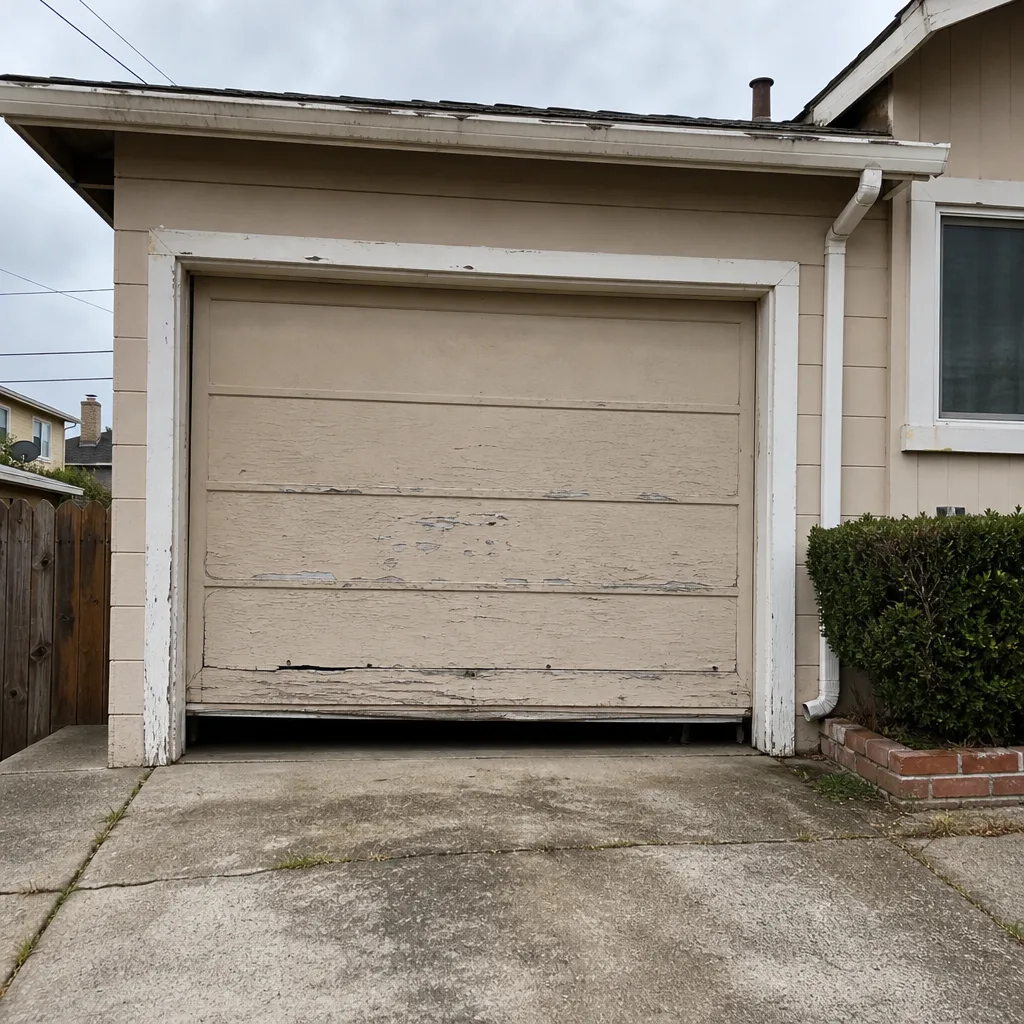 Before
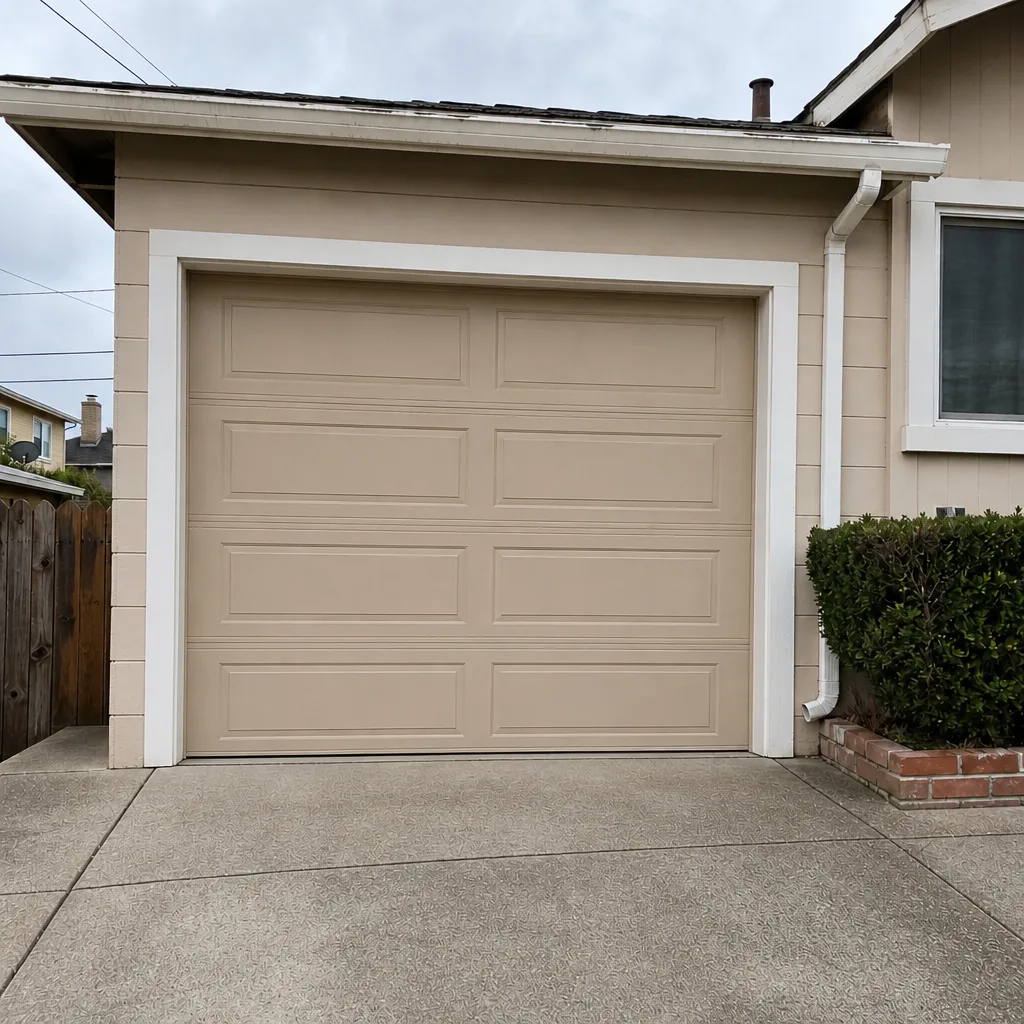 After
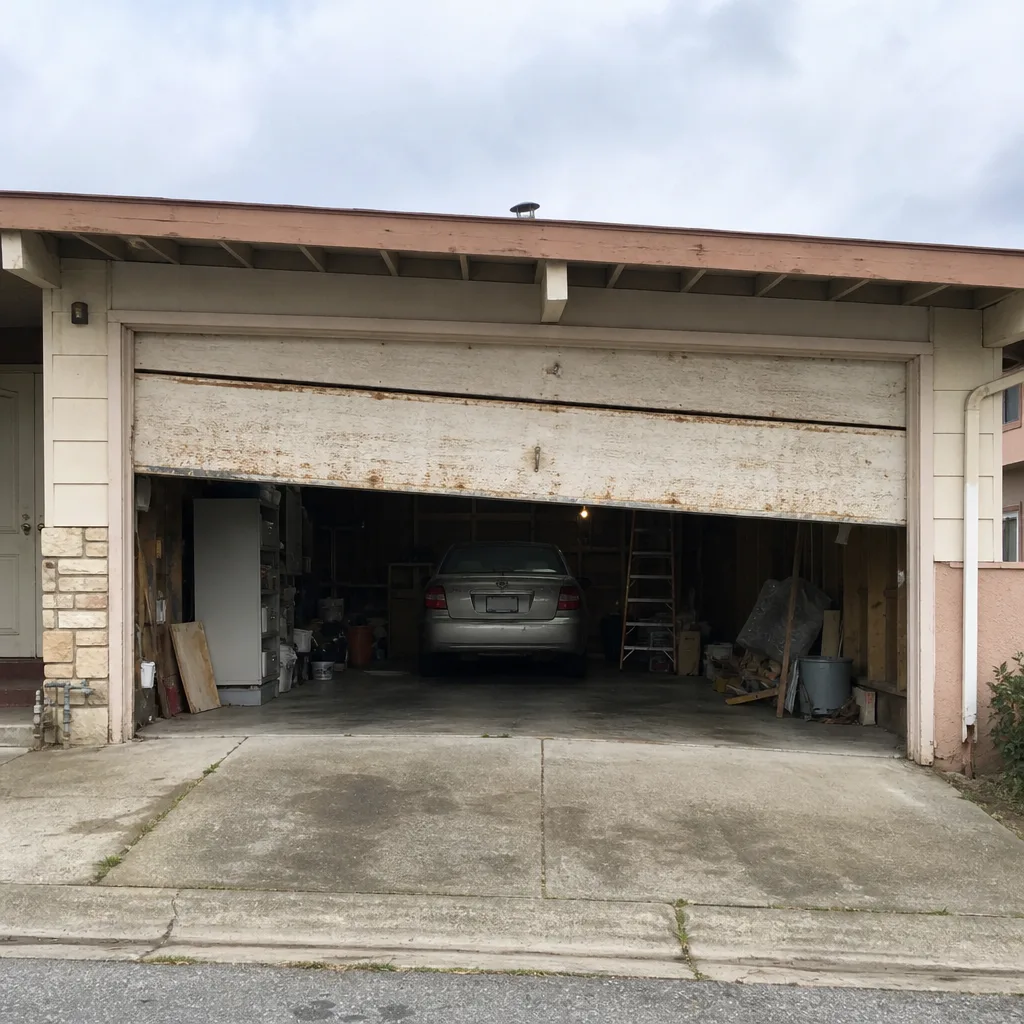 Before
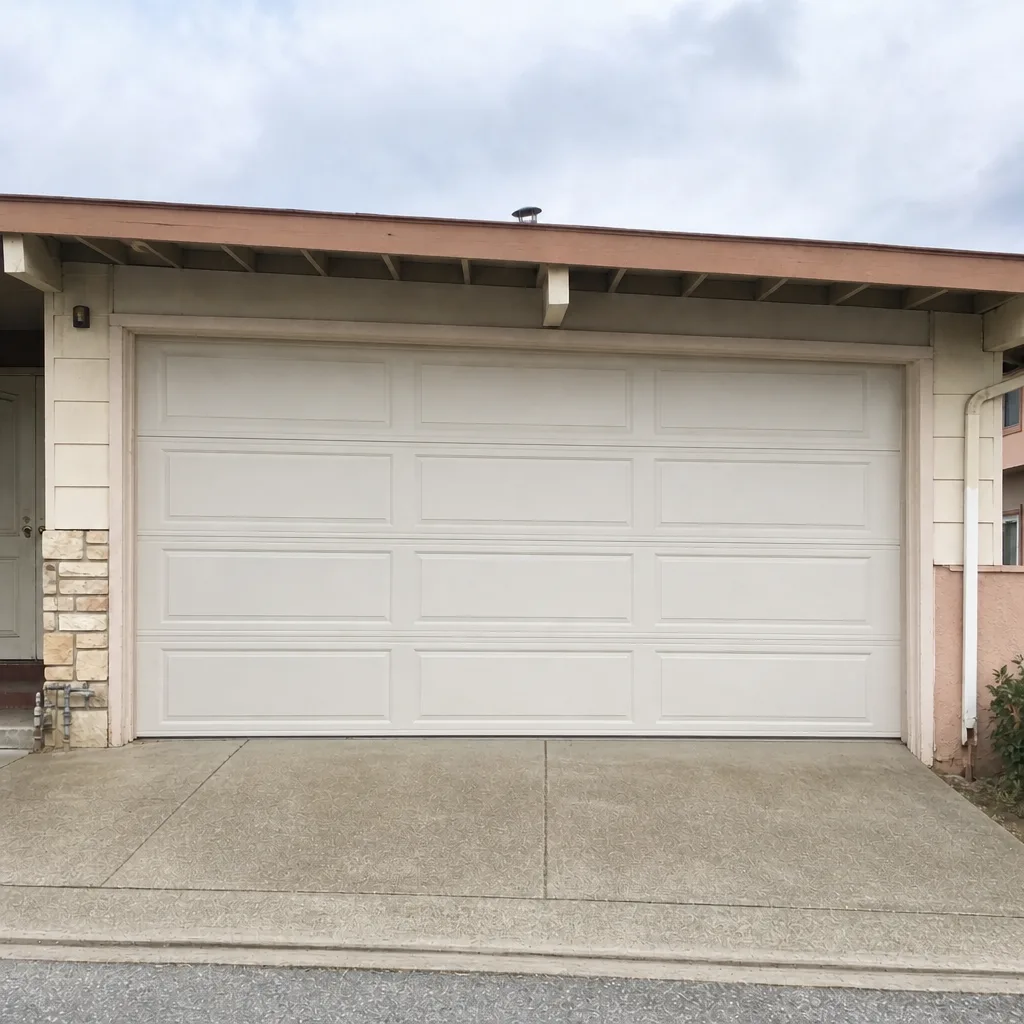 After
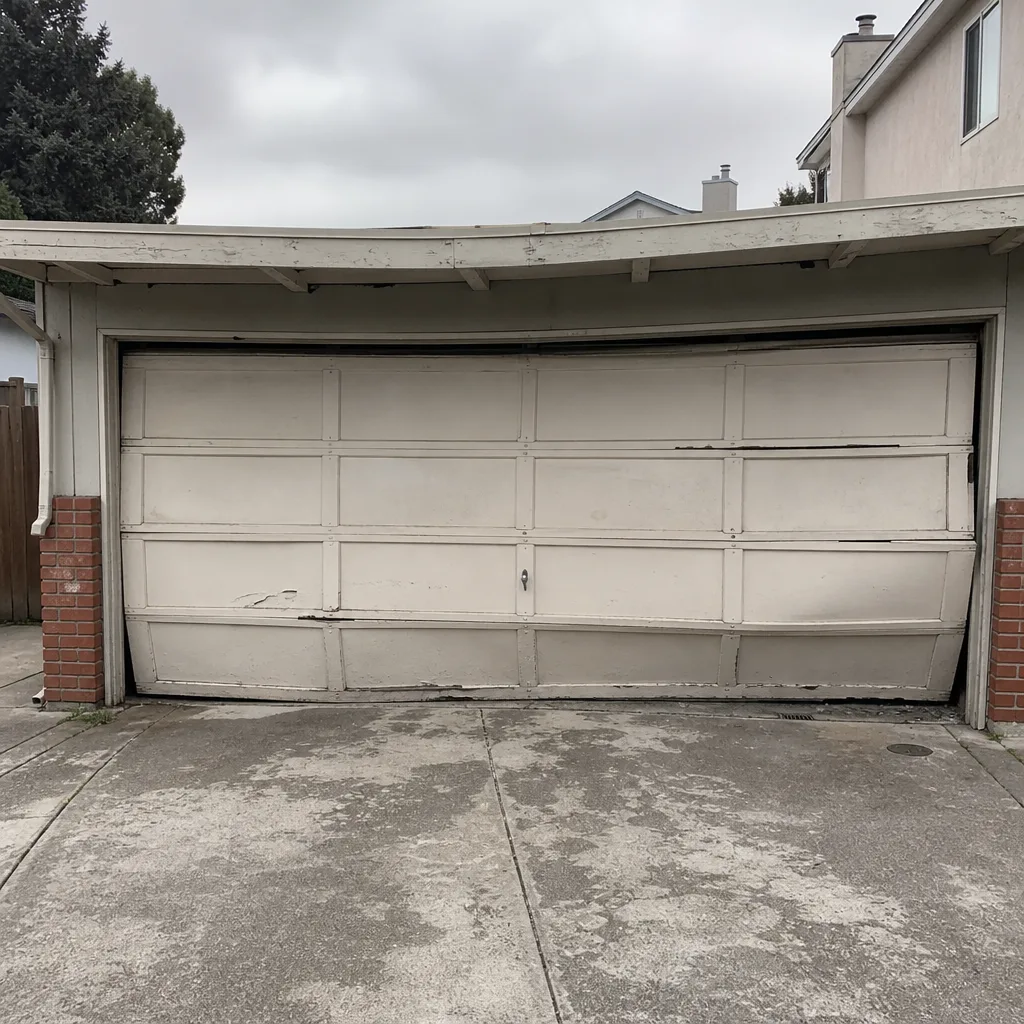 Before
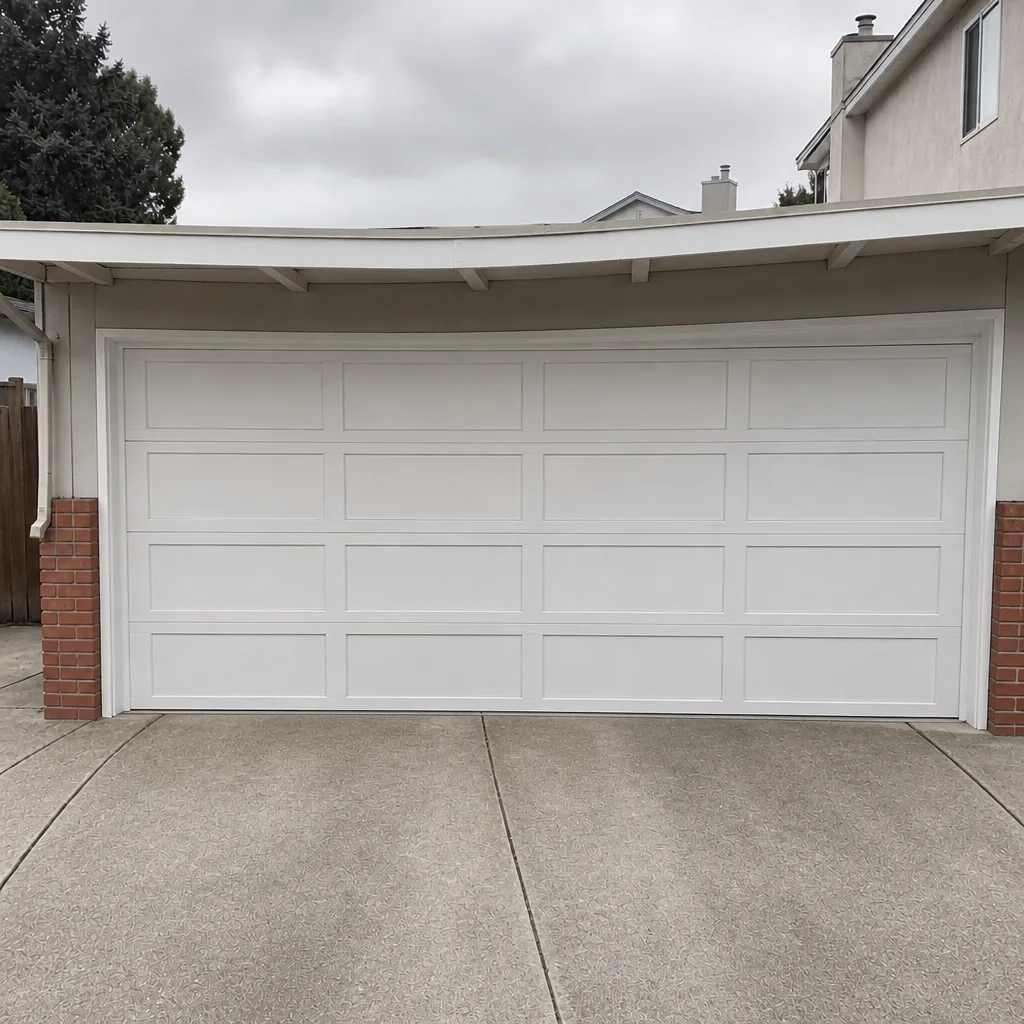 After
When to Call a Professional
Call a technician the same day for anything in the safety hazard list: a visible gap in a torsion spring, a door out of its track on one side, a failed reversal test on a clear sensor path, or a cable that is frayed or kinked. Call within the week for asymmetric travel, a door that drifts in the open position, or grinding that appears on cold mornings. Schedule within the month for rust streaking on the door face without pitting, a noisy hinge, or a bottom seal that’s flattened.
If you’re not sure which category your door is in, describe the symptoms over the phone. Regent Garage Door Repair offers free estimates in Daly City. Call (866) 812-8584. We answer 24/7. Fast dispatch from 7am to 7pm, Sunday through Friday, and a call outside dispatch hours is booked into the next opening. The price is quoted and agreed before any work starts, and the written estimate sets the final price.
Frequently Asked Questions
The most common warning signs we see in Daly City are grinding on cold mornings, rust streaking on the door face and bottom section, asymmetric travel in damp weather, and a door that drifts in the open position. These are the early signals. A snapped spring or a door off its track is the end stage of one of these, not a separate event. Call (866) 812-8584 for an exact quote on a repair inspection, and the estimate is free.
Most repairs in Daly City fall in the range of a few hundred dollars, and the exact price depends on which component failed and the parts your door needs. The written estimate sets the final price, and it’s quoted and agreed before any work starts. A spring replacement is priced per spring, and a matched pair is usually replaced together, so a pair costs about twice a single spring. Call (866) 812-8584 for an exact quote; estimates are free.
Yes, we can usually get to a stuck door the same day. Call (866) 812-8584. We answer 24/7. Fast dispatch from 7am to 7pm, Sunday through Friday, and a call outside dispatch hours is booked into the next opening. If the door is in a safety hazard state, keep it closed and clear until the technician arrives. The estimate is free and the price is quoted before any work begins.
The written estimate sets the final price, so the number on your estimate is the number on your invoice. A technician may find additional wear once the door is moved and inspected closely, and if that happens it’s presented to you as a revised estimate before any of it is done. We don’t start work past the quote without your approval. Call (866) 812-8584 for an exact quote; estimates are free.
Our technicians are experienced professionals, and our technicians have up to 12 years of experience. They’re trained specifically on garage doors and openers, not general home repair, which is why we can diagnose a Raynor or LiftMaster issue on the first visit. We’re a garage door specialist; we don’t do plumbing, HVAC, or electrical. Call (866) 812-8584 to talk through your door’s symptoms.
Place a 2×4 or similar solid object on the ground in the door’s path, close the door with the wall control, and watch whether it reverses on contact. Then wave an object across the photo-eye beam while the door is closing and confirm it reverses on its own. Repeat both tests; a failure on the second attempt is a safety hazard. Stop using the opener and call (866) 812-8584. We answer 24/7.
The Bottom Line
Your garage door is telling you what’s about to fail, but the signals are quiet, and Daly City’s damp air speeds up the failure modes that look most cosmetic. Watch for grinding on cold mornings, rust streaks on the bottom section, drift in the open position, and asymmetric travel. Run the balance test and the reversal test on a regular basis; together they catch the two failure modes that matter most, weakened springs and failed safety logic. Leave springs and cables to a trained technician. Everything else is worth a phone call before the wet season turns it into a bigger job.
Regent Garage Door Repair works on the whole system, repair and opener service and installation, with familiarity across LiftMaster, Chamberlain, Genie, Clopay, Amarr, Wayne Dalton, Craftsman and Raynor. Call (866) 812-8584 for a free estimate. We answer 24/7. Fast dispatch from 7am to 7pm, Sunday through Friday. The price is quoted and agreed before any work starts, and the written estimate sets the final price.
Written by the team at Regent Garage Door Repair.